
Associate Degree in Computer Science
HEC has been encouraging universities to adopt the US model of Associate degrees.
Program Duration
2 years (4 semesters)
Degree Requirements
N/A
A Brief Overview
Keeping in view the local situation, it has been observed that some students find it difficult to pursue a 4-year bachelor’s degree, because of its longer duration and thus the cost of tuition.
The following Associate degree programs are being proposed for adoption by SS-CASE IT.

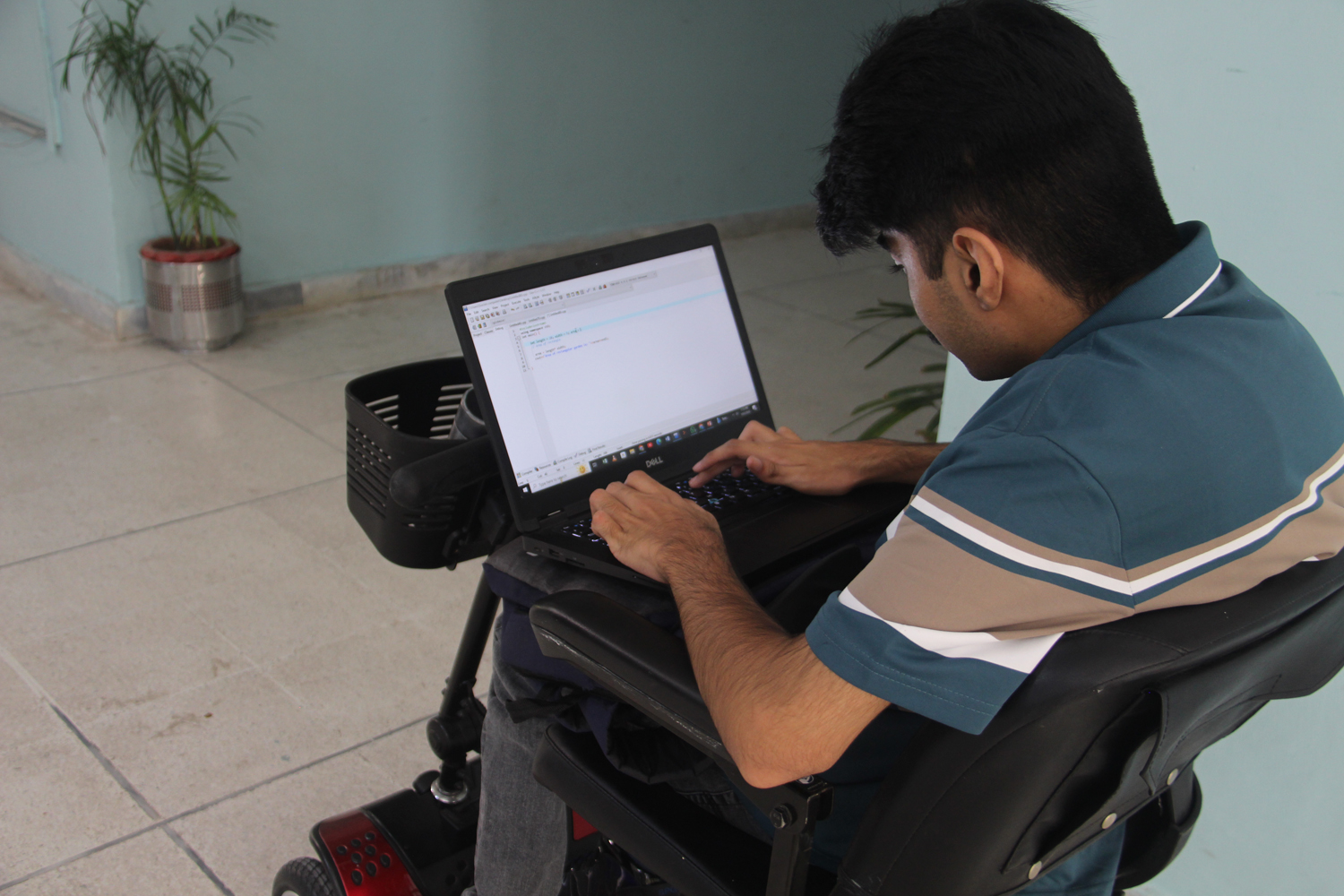

Salient features
- The duration of the degree program is reduced from four to two years.
- After completing two years of education, the students have received sufficient know-how to get employment in the industry.
- After gaining industry experience, and perhaps saving some money, the student can get admission to a 4-year bachelor’s degree program, with the exemption of studying the already passed courses.
- The student completes the remaining two years of education (3rd and 4th year of bachelor’s degree), and receives a 4-year Bachelor’s degree.
ELIGIBILITY for Admissions
- At least 50 % marks in Intermediate (HSSC), A-Level & equivalent examination with Mathematics or equivalent qualification with Mathematics certified by IBCC.
- At least 50% marks for FSc, A-level or equivalent in Pre-Medical. No need to appear in Board intermediate level (FSC or equivalent) exams to clear their mathematics courses.
REQUIREMENTS for Award of Associate Degree in Computer Science programs
The following are the requirements for the award of 2-year Associate degree in the above subjects:
- Must have passed all the courses (73 credit hours), specified in the corresponding study plan of the associate degree program.
- Must have obtained CGPA of at least 2.0.
| Course | CH | Pre-Requisite |
|---|---|---|
| Programming Fundamentals | 3+1 | |
| Application of ICT | 2+1 | |
| Discrete Structures | 3 | |
| Calculus and Analytic Geometry | 3 | |
| Functional English | 3 | |
| 14+2 |
| Course | CH | Pre-Requisite |
|---|---|---|
| Digital Logic Design | 2+1 | |
| Object Oriented Programming | 3+1 | Programming Fundamentals |
| Database Systems | 3+1 | |
| Expository writing | 3 | Functional English |
| Linear Algebra | 3 | Calculus and Analytic Geometry |
| 14+3 |
| Course | CH | Pre-Requisite |
|---|---|---|
| Artificial Intelligence | 2+1 | |
| Computer Networks | 2+1 | |
| Data Structures and Algorithms | 3+1 | Object Oriented Programming |
| Comp. Org. & Assembly Lang. | 2+1 | |
| Information Security | 2+1 | |
| Software Engineering | 3 | |
| 14+5 |
| Course | CH | Pre-Requisite |
|---|---|---|
| Adv. Database Lab | 0+2 | Database Systems |
| Advanced Programming Lab | 1+2 | Data Structures and Algorithms |
| Mobile Application Dev. Lab | 1+2 | Object Oriented Programming |
| Web Technologies Lab | 1+2 | |
| Cyber Security Lab | 1+2 | Information Security |
| Islamic Studies/ Ethics | 2 | |
| Ideology & Constitution of Pakistan | 2 | |
| Entrepreneurship | 2 | |
| 10+10 |
Technological Expertise: Equip students with advanced knowledge and skills in financial technology, including blockchain, digital finance, data analytics, and cybersecurity.
Financial Acumen: Develop a strong understanding of financial principles and practices, enabling students to apply technology solutions effectively within financial services.
Innovation and Entrepreneurship: Foster a culture of innovation and entrepreneurship, preparing students to create and implement disruptive technologies in the financial sector.
Ethical and Regulatory Awareness: Instill ethical principles and regulatory compliance awareness in financial technology practices, emphasizing integrity and responsibility.
Problem-Solving Skills: Cultivate analytical and critical thinking skills to address complex challenges in financial technology through data-driven decision-making.
Communication and Collaboration: Enhance communication and collaboration skills necessary for effective teamwork and stakeholder engagement in diverse technological projects.
Global Perspective: Provide exposure to global trends and best practices in financial technology, preparing graduates for international careers and contributions to the global financial ecosystem.
| Domain | Credits |
| Computer Science Core (10 courses) | 34 (25+27) |
| Domain Core (1 course) | 3 (2+3) |
| Domain Electives (3 courses) | 9 (6+9) |
| General Education Courses (8 courses) | 24 (24+0) |
| Math Supporting Courses (1 course) | 3 (3+0) |
| TOTAL (23 courses) | 73 (60+39) |