
Department of Computer Science
Mission Statement
Our mission is to empower students to become future-ready computer scientists. As a student of the CS Department, you will gain strong foundations in core areas of computing, develop problem-solving skills, and learn to design innovative software solutions. With hands-on experience, industry exposure, and a focus on integrity, you will be prepared to excel in research, entrepreneurship, and professional careers while making a meaningful impact on society.
Accreditation of BSCS from HEC
Our BSCS, BSSE, and BSAI programs are accredited by NCEAC, ensuring your degree is recognized across Pakistan and internationally.
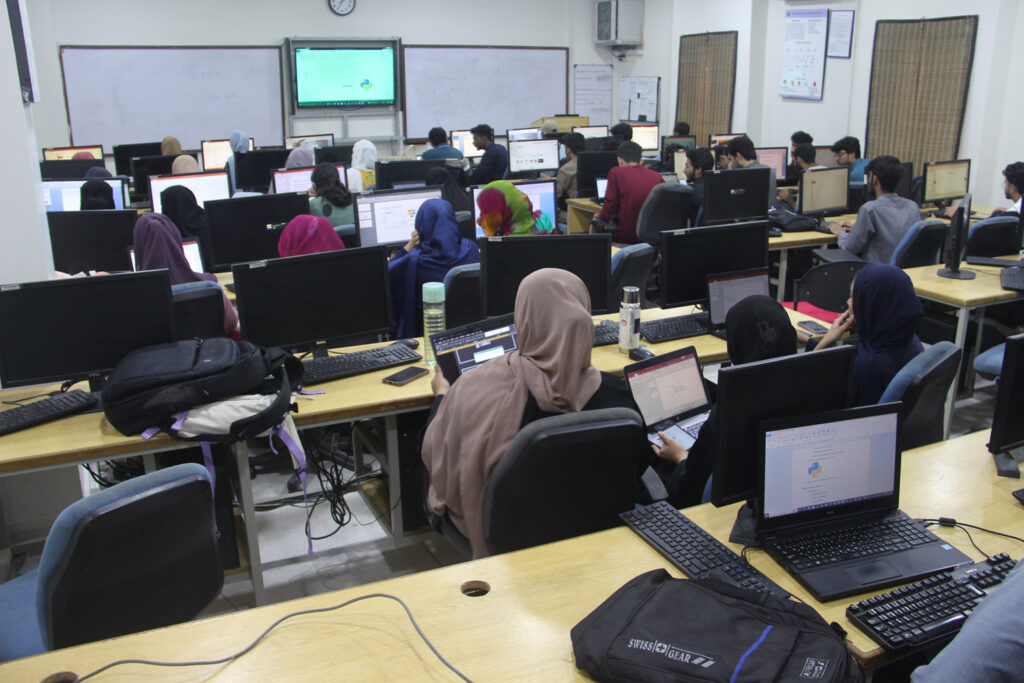
Good News for Intermediate and Equivalent Pre-Medical Students
If you have completed FSc Pre-Medical (or equivalent) with at least 50% marks, you can now pursue your passion for technology by joining our Bachelor’s programs in Computer Science.
Thanks to approval from the National Computing Education & Accreditation Council (NCEAC) of HEC, Pre-Medical students are eligible for admission without retaking Mathematics at the board level. Instead, you will complete two foundation Mathematics courses (6 credit hours) in your first year. These courses are specially designed to build the math skills needed for computing, so you can move forward in your degree without delay.
Available Programs:
BSCS (Computer Science)
BSAI (Artificial Intelligence)
BSSE (Software Engineering)
BSCYS (Cyber Security)
With this pathway, Pre-Medical students can smoothly transition into the world of computing, AI, software development, data science, and cybersecurity, opening exciting career opportunities in Pakistan and abroad.
Career Benefits for
Pre-Medical Students in Computing Programs
Students with Pre-Medical backgrounds have a large no of career possibilities in computing.
Main Stream Computing: This includes Artificial Intelligence Engineer, Cyber Security Analysts, Database Administrators, Data Science Analysts, System Administrators, Game Developers, etc.
Biomedical Computing: These students can also explore their careers in Diagnostics of disease through Medical Imaging and Artificial Intelligence, Genomics and Genetics Sciences, Laboratory Computing, Hospital Information Systems, Computer Assisted Therapy, Virus Patterns like the Corona family of viruses, Clinical Computing, Bioinformatic Systems, etc.
Options for
Pre-Medical Students
Pre-Medical students don’t need to appear in Board intermediate level (FSC or equivalent) exams to clear their mathematics courses. The two mathematics courses taught in the first semester will make them eligible to continue their education in computing courses from Fall 2020 semester as per HEC directives thus saving their time. Below are the options for Pre-Medical students
Future Growth Trends
The global IT industry is expanding at 3.7% annually, creating endless opportunities for skilled graduates. With a degree in Computer Science, Artificial Intelligence, Software Engineering, or Cyber Security, you’ll be prepared to contribute to society by designing technologies that drive progress in healthcare, education, business, and security.
Program Learning Outcomes (PLOs)
- Academic Education: To prepare graduates as computing professionals.
- Knowledge for Solving Computing Problems: Apply knowledge of computing fundamentals, knowledge of a computing specialization, and mathematics, science, and domain knowledge appropriate for the computing specialization to the 16 abstractions and conceptualization of computing models from defined problems and requirements.
- Problem Analysis: Identity, formulate, research literature, and solve complex computing problems reaching substantiated conclusions using fundamental principles of mathematics, computing sciences, and relevant domain disciplines.
- Design/ Development of Solutions: Design and evaluate solutions for complex computing problems, and design and evaluate systems, components, or processes that meet specified needs with appropriate consideration for public health and safety, cultural, societal, and environmental considerations.
- Modern Tool Usage: Create, select, adapt, and apply appropriate techniques, resources, and modern computing tools to complex computing activities, with an understanding of the limitations.
- Individual and Team Work: Function effectively as an individual and as a member or leader in diverse teams and in multi‐disciplinary settings.
- Communication: Communicate effectively with the computing community and with society at large about complex computing activities by being able to comprehend and write effective reports, design documentation, make effective presentations, and give and understand clear instructions.
- Computing Professionalism and Society: Understand and assess societal, health, safety, legal, and cultural issues within local and global contexts, and the consequential responsibilities relevant to professional computing practice.
- Ethics: Understand and commit to professional ethics, responsibilities, and norms of professional computing practice.
- Life‐long Learning: Recognize the need, and have the ability, to engage in independent learning for continual development as a computing professional.
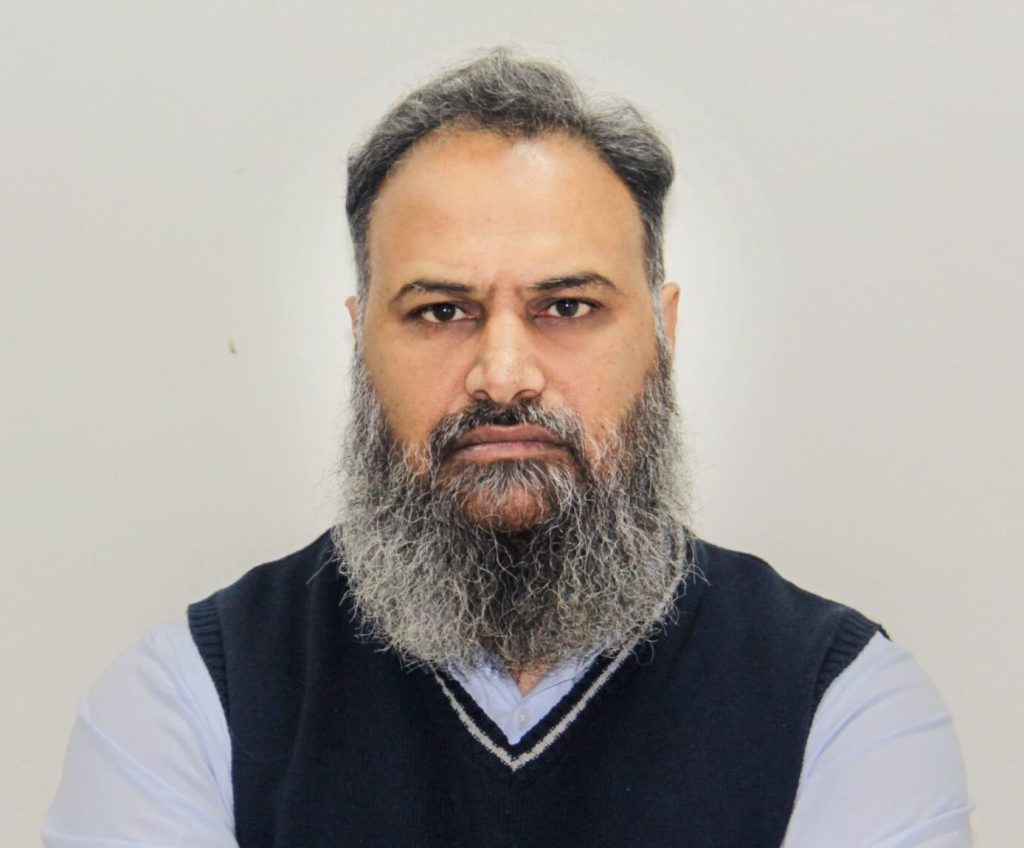
Dr Syed Jawad Hussain
Dean’s Message
It is a privilege to welcome you to the Faculty of Computing at SS CASE IT. As the institute continues to advance since attaining degree-awarding status, our focus remains firmly on delivering high-quality education and impactful research.
Based at our purpose-built B-17 campus, the Faculty of Computing offers a comprehensive range of Undergraduate and Graduate programs in Computer Science, Software Engineering, Cyber Security, Artificial Intelligence, and Data Science. All programs are accredited by NCEAC, reflecting our dedication to upholding national standards of academic excellence.
To support students academically and financially, the institute provides a range of financial aid and scholarship opportunities. In addition to degree programs, we also offer industry-relevant certifications that enhance students’ professional readiness and competitiveness in the job market.
With dedicated faculty, strong academic leadership, and a motivated student body, I am confident in the department’s continued progress and its role in shaping the next generation of computing professionals.
I welcome you to be part of this vibrant academic community.